
Lighting for Entertaining: How to Set the Perfect Scene

Entertaining at home depends as much on atmosphere as it does on food and conversation. From the first arrival at the entryway to the last conversation lingering by the kitchen island, the way the space is lit sets the tone before anyone says a word. Even simple details, like soft glows along shelving or understated light displays around a bar area, can make the evening feel more intentional and considered.
Good entertaining light is rarely a single fixture on a dimmer. It is a set of layers that can be raised, lowered, or shifted as the night unfolds. When those layers are planned with care, the home feels welcoming rather than staged. In this article, we’ll look at how to build those layers for living rooms, dining areas, kitchens, and outdoor spaces, and how to use controls to move smoothly from everyday lighting to a setting that feels ready for guests.
How can I use lighting to create the right mood when I have guests?
The most successful entertaining setups feel relaxed and flexible. Lighting has to support all of that without becoming a distraction. Instead of treating it as a final step before people arrive, it helps to think in scenes: one for arrival, another for dinner, another for the later part of the evening when conversation slows and the space can afford to feel more intimate. Each scene pulls from the same fixtures, but in different combinations and intensities.
A good starting point is to decide which areas should draw attention and which should quietly fall back. Seating, the dining table, the kitchen island, and any bar or serving area usually deserve the most attention. Circulation paths and background zones benefit from softer, more diffused light. Once those priorities are clear, the choices around dimming and decorative fixtures become much easier.
Build a comfortable baseline with ambient light
Ambient light sets the foundation before any accents or decorative pieces come into play. In living rooms and open-plan spaces, this often means a mix of ceiling lighting and softer sources like floor or table lamps. The goal is to avoid harsh contrasts so guests can move comfortably and feel at ease. Too bright, and the room feels clinical; too dim, and people start to strain their eyes.
For entertaining, slightly lower levels than everyday task lighting usually work better. Dimmers are essential here. They allow you to take the general lighting down a step or two and let other layers add character. A warm color temperature in the main living areas keeps skin tones flattering and gives the setting an immediate sense of warmth.
Use layers to define zones for conversation, dining, and serving
Entertaining rarely happens in one fixed spot. Guests drift between the sofa, the dining table, the kitchen, and any area where drinks or food are set out. Lighting can quietly guide that movement. A bit more intensity over a dining table, a clear pool of light on the island, and softer but stable levels in seating zones help the layout feel intuitive.
In practice, that might mean a combination of pendants over the table, under-cabinet lighting in the kitchen, and a pair of lamps in the living area that anchor conversation zones. Shelving, consoles, or that area with subtle light displays near a bar or sideboard can act as visual markers, encouraging people to gather in specific pockets of the room. The goal should be a space that feels organized without looking overly staged.
Let accent lighting shape the atmosphere and highlight key features
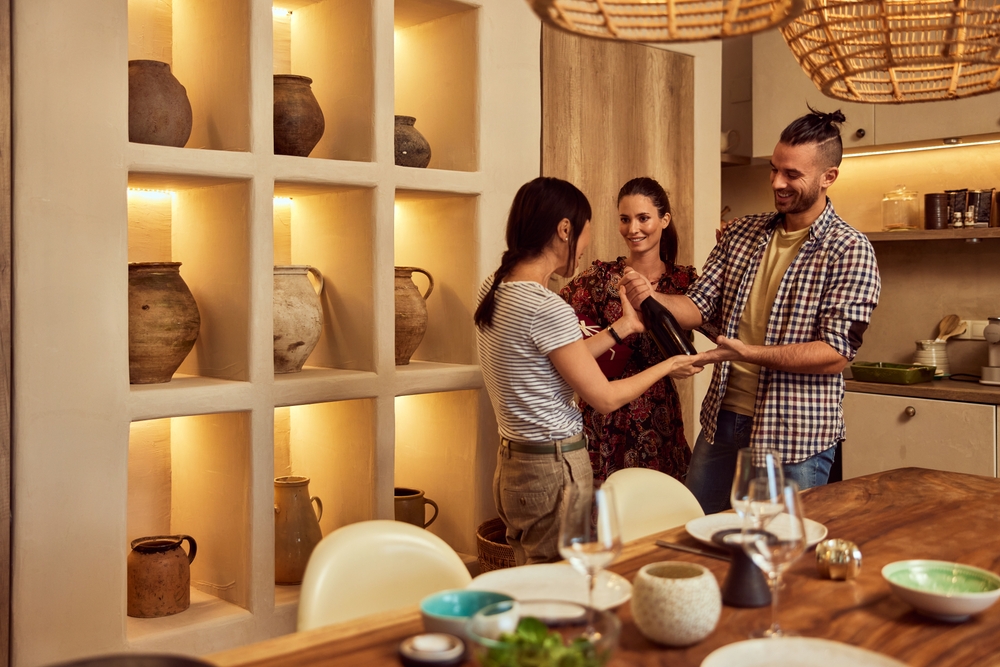
Accent lighting gives structure to the scene. It can pick out artwork, architectural details, backlit shelving, or a favorite material finish. For entertaining, a few well-placed accents can do more than a large increase in overall brightness. They draw the eye and help the room feel composed in photos and in person.
Wall washers and integrated staircase lighting work well here. Backlit niches, illuminated stone or wood surfaces, and soft glows along built-in cabinetry all create a sense of refinement. The key is restraint. A handful of strong accents will feel intentional, but too many can make the space busy and confusing.
Treat decorative fixtures as focal points, not the only light source
Chandeliers and sculptural fixtures often become the visual signature of a room. For entertaining, they are important, but they should rarely carry the entire job of lighting the space. If they are too bright, guests will tend to look away from them; if they are too dim and there’s no support from other layers, the room can feel underlit.
A better approach is to set decorative pieces at comfortable levels and let them contribute to the mood, while ambient and accent layers handle clarity. Dimming them slightly during dinner or later in the evening lets the glow feel inviting rather than overpowering. This balance allows the fixture to read as an intentional design element instead of a standalone dominant source.
Use controls and scenes to move smoothly through the evening
Even the best lighting plan falls flat if it takes ten switches and guesswork to adjust it. Thoughtful controls tie everything together. Scene-based systems or app-based controls allow quick transitions: one setting for arrival, another for dinner, and another for late-night conversation.
These scenes can shift brightness but also which fixtures are active. Early in the evening, you may rely more on ambient and decorative light. As the evening progresses, lamps and accents can take over while ceiling levels drop. The ability to move through those stages with a single tap keeps the focus on your guests instead of on managing the room, and it’s often the detail people remember, even if they can’t quite explain why the space felt so comfortable all night.
Thinking about light displays for your home? Let’s design them properly.
Bringing in a lighting designer for your project means treating the whole home as a connected experience, rather than a series of isolated fixtures. Illuminated Lighting Design Services maps out how each area should feel when you’re entertaining, from relaxed living spaces and bar zones with subtle light displays, to dining areas that can shift from lively to intimate with a simple adjustment. If you’re rethinking lighting in your bathroom, guest suites, or that corner of the kitchen where everyone always seems to gather, we’ll shape lighting around the way you live in Fort Myers or another part of FL. Ready to stop guessing with switches and dimmers and move to a plan that simply works every time people come over? Our team is here to help.