
What to Consider Before Retrofitting Your Lighting With LEDs
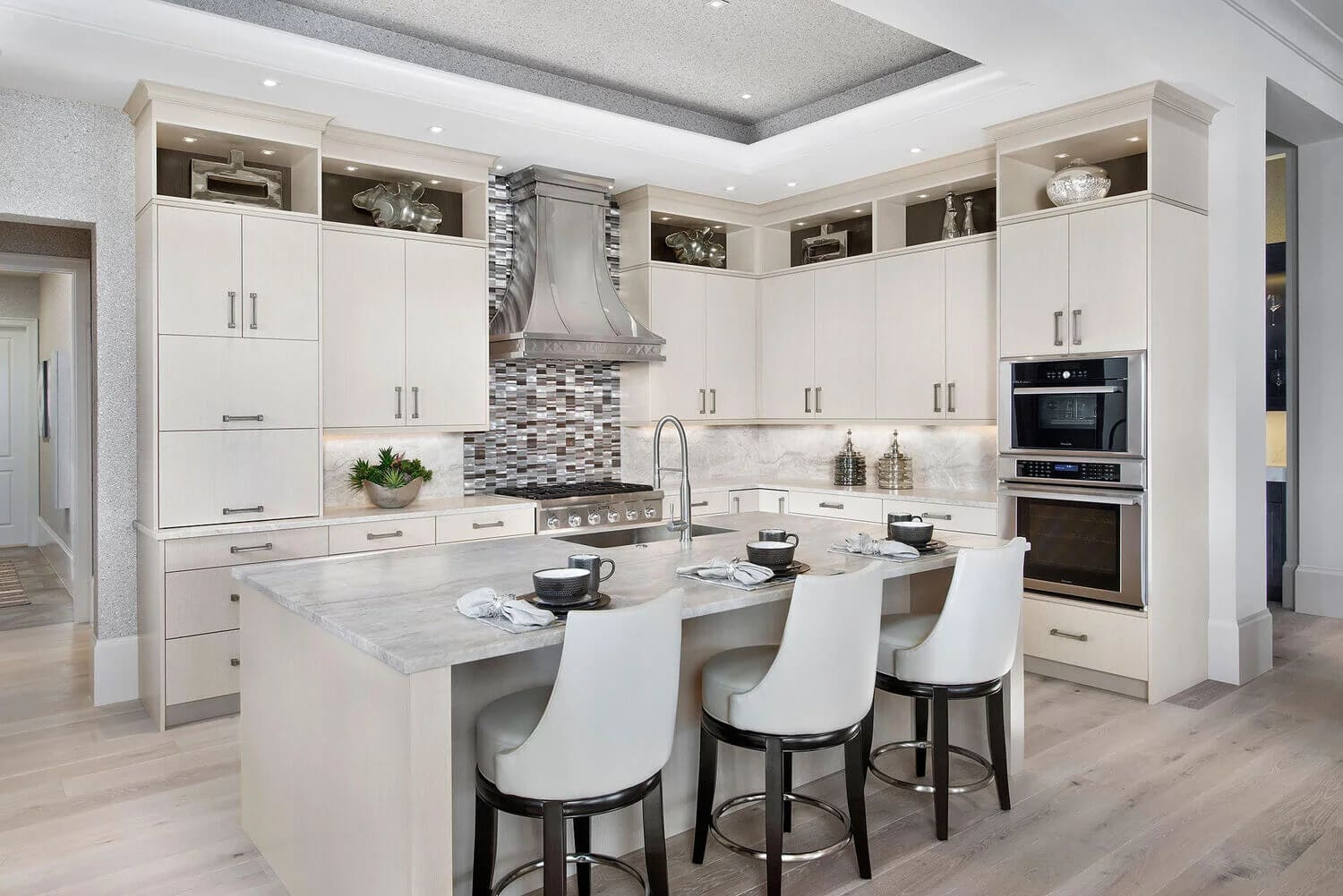
A successful LED retrofit starts with a deceptively simple question: What do we want the light to do? People don’t get inspired thinking about what wattage should go into the ceiling or which trim happens to fit. What gets homeowners excited is the magic that happens when the evening settles in, the lights come on, and the interiors start to take on a personality of their own.
And the best thing about modern lighting technologies is that the answer changes from room to room. A kitchen needs clarity while retaining warmth and not feeling clinical. Artwork deserves lighting that lets its colors, textures, and details speak for themselves. Stone, wood, textiles, and cabinetry need thoughtful illumination that reveals rather than washes them out. And in some cases, the most beautiful thing recessed lights can do is quietly disappear from the scene.
As the leading lighting retrofit company, Illuminated Lighting Design goes into fine detail when choosing LED components and blending them seamlessly into your home to brighten up your evening and add texture to your life. A retrofit may start in the ceiling, but its impact is felt everywhere the light lands.
What deserves a closer look before LEDs enter the scene?
We never apply a single LED retrofit recipe to every home or business. The existing system gives us the starting point, but the architecture, materials, and way you use the space tell us where to go next.
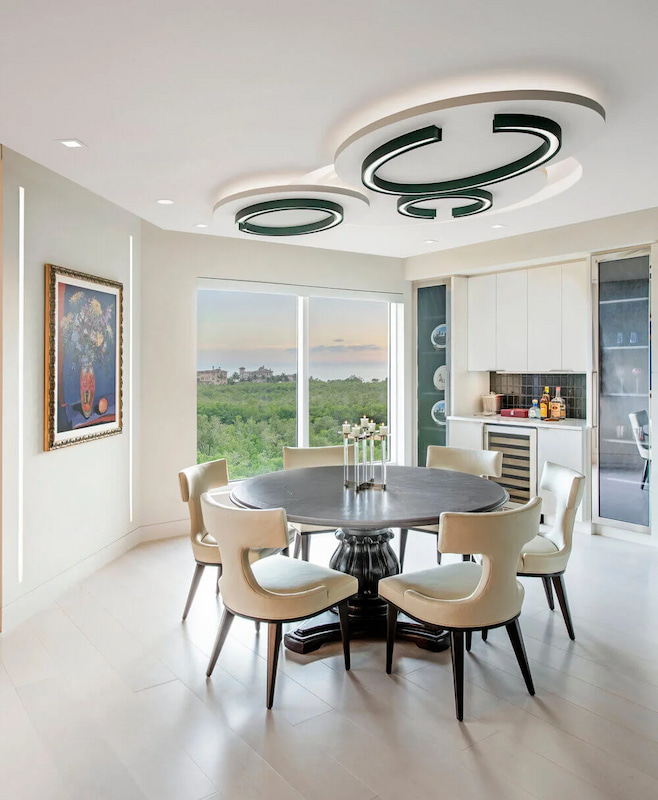
Brighter isn’t always better
For years, homeowners were taught to think about light in watts. With LEDs, that old habit needs a little updating. While watts tell us how much energy a light uses, lumens tell us how much light it produces. ENERGY STAR recommends comparing brightness by lumens rather than wattage when selecting modern lighting. A traditional 60-watt incandescent, for example, produces roughly 800 lumens.
That covers the technical part. But as a company that merges modern tech with sophisticated design, we know that lumens don’t tell the entire story either. A room doesn’t become more beautiful simply because we throw more light at it. It’s about how technology meets design to create atmosphere and give a space its soul.
That’s why we consider ceiling height, natural light, finishes, room function, fixture placement, and lighting layers like task or ambient lights.
Sometimes the answer is more light. Sometimes it’s better-placed light.
What color should white light be?
White has a surprisingly colorful personality. Correlated color temperature, or CCT, describes whether white light appears warmer and more golden or cooler and crisper. Lower Kelvin temperatures create warmer light, while higher values shift toward cooler white.
We don’t believe in assigning one magic Kelvin number to every kitchen, bathroom, or living room. Instead, we look at what the light will live alongside.
Warm woods may respond beautifully to one temperature, while pale stone, contemporary finishes, or a crisp architectural palette may call for another. We also consider neighboring fixtures so the room doesn’t accidentally become a patchwork of different whites.
The goal is harmony, not keeping the Kelvin rulebook happy.
Let your colors tell the truth
Then there’s color rendering—and this is where beautifully selected interiors can either sing or fall strangely flat. Color Rendering Index, or CRI, describes how faithfully a light source reveals colors. The U.S. Department of Energy notes that 80 CRI is generally considered a minimum for interiors, while 90 or above indicates excellent color fidelity.
That difference may seem small, but for the spaces we design it matters enormously.
Veining in marble, warmth in walnut, saturated artwork, rich fabrics, custom cabinetry—all these possess a certain splendor and deserve a spotlight that lets their refined character shine through. That stone took a few million years to become fabulous. We’re not about to make it look beige.
Where is that beam actually going?
Two LEDs can have similar brightness and color characteristics and still create completely different rooms. Why? Beam distribution.
A broad beam may provide general illumination across a larger area. A tighter beam can draw the eye toward sculpture, artwork, or a particular architectural feature. With adjustable sources, we can direct light toward exactly what deserves attention.
We think about whether the light needs to wash a wall, illuminate a work surface, accent an object, soften a circulation area, or simply support the room design from above.
Good lighting isn’t only about how much light leaves the fixture. It’s about where that light arrives and how.
Will the old & new play nicely together?
Here comes the less glamorous, but absolutely essential, part. Before choosing a retrofit product, we need to understand the existing housing, opening size, wiring, socket or connection, fixture condition, clearances, and controls. A component that physically fits isn’t necessarily technologically compatible with everything around it.
Dimming deserves special attention. Not every LED works smoothly with every dimmer, and mismatched combinations can create flickering, buzzing, limited dimming ranges, or lights that refuse to cooperate altogether. ENERGY STAR specifically recommends checking LED and dimmer compatibility when choosing downlights.
This doesn’t mean that old dimmers and new LEDs can’t get along—we know they can. It just means that we prefer to introduce them properly.
Where will the fixture live?
A recessed light over a dry, indoor hallway and one exposed to moisture don’t live the same life.
Bathrooms, covered exterior areas, and other environments may require appropriately damp- or wet-rated products. We may also need to consider insulation contact and airtight construction depending on where and how the downlight is installed. ENERGY STAR specifically identifies IC-rated fixtures for locations where insulation will touch the downlight and airtight models where air leakage is a concern.
These aren’t the glamorous decisions, but beautiful lighting still has to behave itself behind the ceiling.
And yes, we’re judging the ceiling
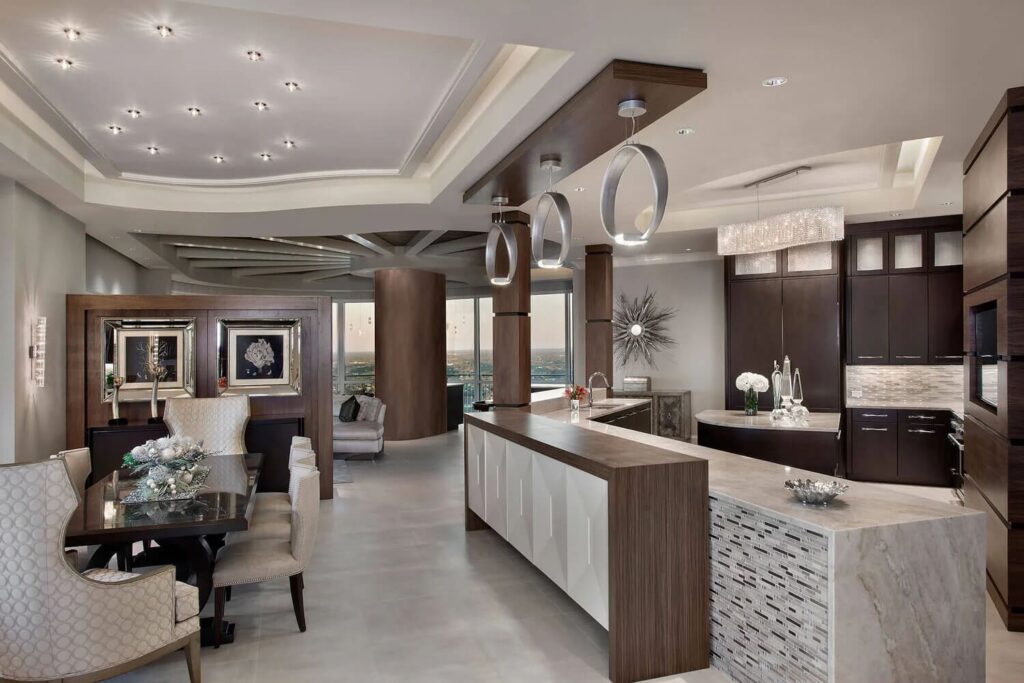
We admit it. We look up.
Trim size, aperture, finish, proportion, and consistency all affect the finished room. A thoughtful retrofit shouldn’t leave you with a ceiling scattered with mismatched rings, competing finishes, and fixtures that look as though they arrived from different decades.
We want the ceiling to feel calm enough so that your eye travels toward the architecture, artwork, furnishings, and people below it, not toward the hardware overhead.
After all, recessed lighting does some of its best work when nobody is staring at the fixture.
Where can I find the leading lighting retrofit company in Naples, Fort Myers & the region?
Want to make the right choices before the lights go in? Illuminated Lighting Design can help you look at the bigger picture before a single trim comes down. From how bright the room should feel and which color temperature flatters the finishes to where each beam should land and whether your existing fixtures, dimmers, and controls are ready to play along, we account for every nuance.
If you’re still getting acquainted with what an LED retrofit can actually change or wondering whether the investment earns its place, we’ll help you explore why upgrading existing lighting is worth the switch.
No matter where your home sits along or beyond the Tamiami Trail, that’s where we come in. Because choosing an LED that fits the ceiling is easy. But choosing better lighting that serves a better purpose and lets you enjoy a better experience takes a sharper eye. Let’s make every lumen earn its place.