
Why Live with Yesterday’s Light? The Case for an LED Lighting Retrofit
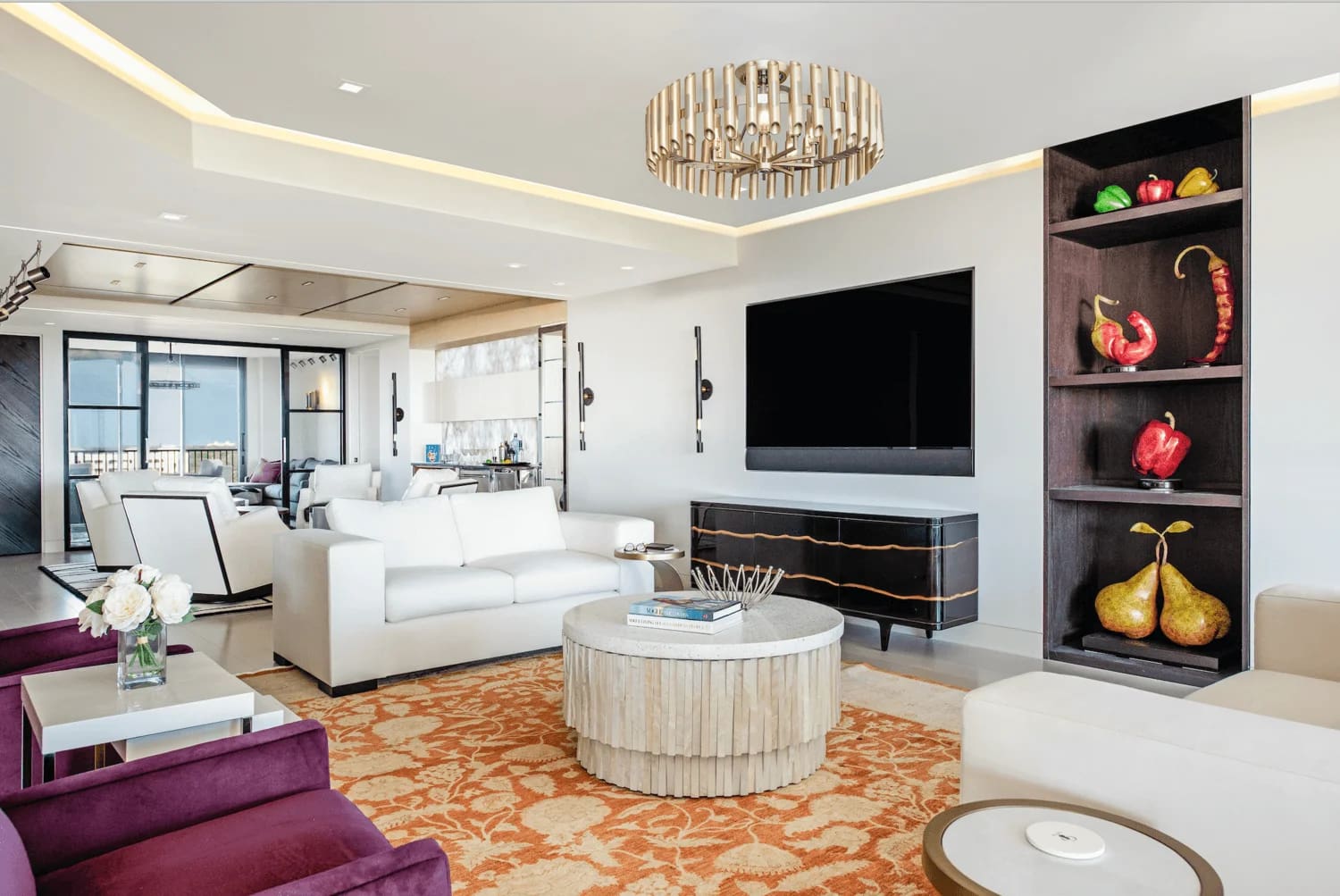
There comes a point when yesterday’s lighting starts giving off a vibe that says dated, stale, flat. Maybe your interiors still look impeccable, but the illumination feels yellow, patchy, too hot, difficult to dim, or strangely indifferent to everything you carefully chose to put beneath it. Beautiful marble shouldn’t look muddy. Art shouldn’t fade into the wall. And your lighting certainly shouldn’t be the hardest-working line item on the electric bill.
But there’s an even more fundamental question: Is your lighting still doing what you need it to do?
Technology changes. Spaces evolve. Our expectations change. And lighting equipment itself eventually reaches the end of its useful life. A system designed fifteen or twenty years ago may still turn on, but simply producing light is a pretty low bar for determining whether the lighting is actually working well.
That’s the real appeal of retrofit recessed lighting. We can bring modern lighting technology into an existing space without automatically dismantling everything that came before it. At Illuminated Lighting Design, we see the upgrade as an opportunity to improve efficiency and performance while giving the room a visual lift. Less waste, less fuss, better functionality, better quality of light, and much more freedom to decide what the space should feel like after sunset.
Or, to put it another way: better lighting with a better purpose leads to a better experience.
Why are LED retrofits having their moment?
Because they solve more than one problem at a time.
A well-planned retrofit can reduce the amount of electricity your lighting uses, cut down on replacement and maintenance, improve the quality of the illumination, introduce better dimming and control, reduce unwanted heat, and give us much greater authority over how a room looks, functions, and feels.
Sometimes the WHY is obvious: lamps are burning out, components are failing, or replacement products are becoming difficult to find. Other times, the existing lighting still technically works but has simply been surpassed by better technology. And sometimes the room itself has changed. Furniture moved. Artwork arrived. A bedroom became an office. The kitchen became the center of the home. What worked yesterday may not work particularly well today.
Unlike an all-or-nothing renovation, a retrofit lets us respond intelligently to those changes while working with what’s already there. If portions of the existing system still make sense, we don’t replace them merely for the pleasure of filling a dumpster.
That practicality is part of the beauty.
Keep what works & skip unnecessary disruption
A lighting upgrade doesn’t always need to become a ceiling project. When the existing housings, locations, wiring, or other components remain suitable, LED retrofits allow us to modernize the light while retaining useful parts of the original installation. That can mean less demolition, fewer new materials, and less disturbance to finished ceilings and surrounding architecture.
For an established home with detailed ceilings, custom millwork, stone, or carefully coordinated finishes, restraint matters. We would rather work around what deserves to stay than disturb a beautiful room just to prove we can rebuild it.
That’s one of the strongest arguments for exploring a retrofit in the first place: What if the lighting could become substantially better without substantially rebuilding the room?
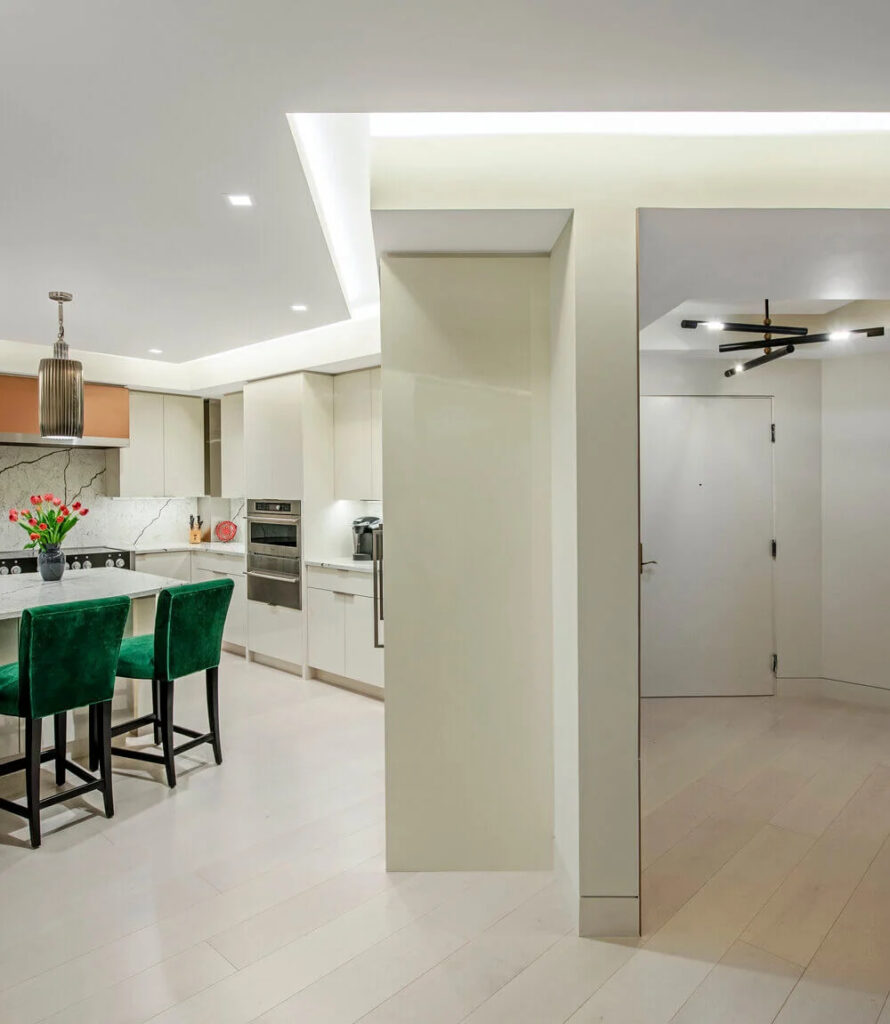
Let your lighting use its energy on light
Old incandescent technology is wonderfully straightforward: send electricity through a filament until it becomes hot enough to glow. Unfortunately, a great deal of that energy becomes heat rather than visible light.
Modern LEDs approach the job very differently. ENERGY STAR notes that LED lighting can produce light up to 90% more efficiently than incandescent bulbs, although the exact savings from a retrofit depend on what you’re replacing and how the new system is designed.
The result is simple: lighting can become a much smaller energy load without asking you to live in the dark.
But efficiency isn’t merely about watts. Add thoughtful dimming and controls, and we can make sure light appears where, when, and at the level you actually need rather than running at full output simply because the switch is on.
Give the dimmer an upgrade, too
An LED retrofit shouldn’t stop at the ceiling. Sometimes yesterday’s technology is still hiding quietly in the wall.
Older dimmers and control systems were often designed around incandescent, halogen, fluorescent, or other loads that behave very differently from modern LEDs. Replace the light source without considering what controls it, and the new technology may inherit an old problem. Flicker, buzzing, pop-on, drop-out, limited dimming range, inconsistent performance, or lights that simply refuse to turn completely off can all point to a mismatch between the LED source, its driver, and the dimming technology.
That’s why we look at the entire lighting system during a retrofit—not just the fixture. Depending on the LED technology being introduced, existing dimmers may need to be replaced or portions of the control system upgraded so the source, driver, and controls are designed to work together.
And this isn’t merely about fixing compatibility problems. Modern LED dimming can give us substantially better authority over the light itself. A fixture capable of smoothly dimming down to a soft glow creates possibilities that an old switch—or poorly matched dimmer—simply can’t. Add scene controls, scheduling, occupancy response, or integration with a larger lighting-control system, and the retrofit begins doing something much more interesting than saving electricity.
It allows the lighting to adapt
Bright and functional when you need to see. Soft and subdued when you want to settle in. Carefully balanced when entertaining. Nearly invisible when the architecture, artwork, or view should take center stage.
That’s an important part of the WHY behind an LED retrofit. Better lighting isn’t just about producing better light; it’s about having better control over when, where, and how much of that light you use.
Better control gives light better purpose. And better lighting with a better purpose leads to a better experience.
You deserve to flatter your finishes, too
Efficiency gets plenty of attention, but we’re lighting designers. Naturally, we’re going to talk about what the room actually looks like. Modern LED products give us far more opportunity to refine color quality, beam spread, intensity, color temperature, glare, and direction. That matters when light lands on veined stone, warm wood, metallic finishes, textiles, artwork, cabinetry, or a wall color you spent three weeks choosing.
The wrong illumination can flatten those details. It can distort color, wash out texture, create glare, or pour light indiscriminately into a room without giving your eye anywhere meaningful to go.
The right light reveals
That’s an important WHY behind retrofitting that can get lost in the conversation about energy savings. You already invested in the architecture, finishes, furnishings, artwork, and objects that give a space its character. Lighting determines how much of that investment you actually get to see after dark.
A retrofit gives us another chance to make sure the lighting is showing the interior as it was meant to be seen.
One technology, many personalities
LEDs don’t come with a single look. We can work with warm, intimate light, crisp architectural illumination, tighter beams for accents, broad distributions for general light, adjustable fixtures, dimmable sources, and more sophisticated color-control options. That flexibility helps a retrofit blend into very different interiors rather than announcing itself as “the new LED lighting.”
A coastal contemporary home, a richly layered traditional interior, an art-forward condominium, and a sleek commercial space shouldn’t all wear the same light. More importantly, the same room shouldn’t necessarily wear the same light all day long. The technology should adapt to the architecture, activity, people, and purpose—not the other way around.
Less heat where you actually feel it
Incandescent lamps create a great deal of radiant heat because producing heat is essentially built into how they make light. LEDs still generate heat internally and need proper thermal management, but they release far less radiant infrared heat into the room. The difference becomes especially noticeable when older lighting is concentrated overhead or around display areas, task zones, and other places where people spend time.
This can be particularly compelling in Southwest Florida, where we already spend plenty of energy trying to keep heat outside the building. Adding unnecessary radiant heat from the lighting system only gives the air-conditioning another problem to solve.
We’re not interested in turning the ceiling into a collection of tiny space heaters. Light should add atmosphere, not temperature.
Change bulbs less, work a little less
Lighting has a habit of demanding attention at the least glamorous moment. One lamp goes out over the staircase. Another starts behaving differently from its neighbors. A third has been replaced with something that’s almost the same color as everything else.
Suddenly the ceiling has developed a personality of its own.
Quality LED products generally offer much longer useful lives than traditional incandescent sources. Rather than failing in quite the same way as an old bulb, LEDs typically lose output gradually over time.
That longevity can make maintenance considerably less intrusive, particularly in high ceilings, stairwells, exterior locations, commercial environments, or anywhere else where changing a lamp requires more than dragging over the kitchen step stool.
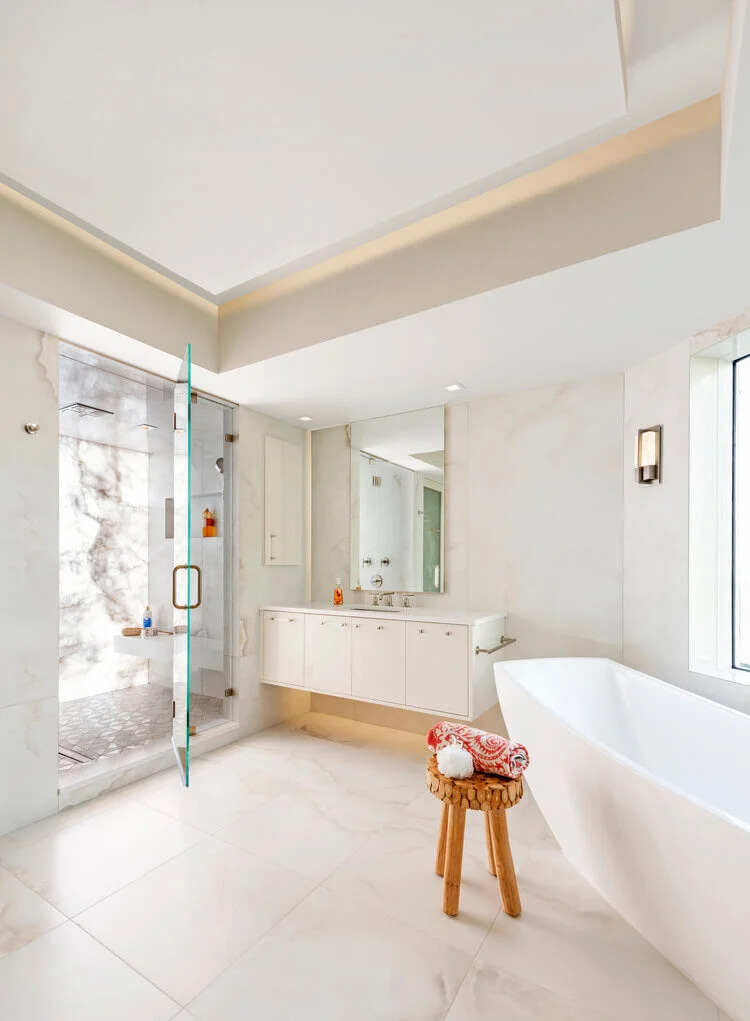
And sometimes longevity itself becomes the reason to retrofit. Older lamps, drivers, transformers, ballasts, or early-generation LEDs eventually reach the end of their rated lives. Rather than continuing to replace yesterday’s components one failure at a time, that moment can become an opportunity to reconsider the system as a whole.
A lighter footprint for the upgrade itself
The environmental conversation goes beyond electricity. Using less power reduces the energy demand associated with lighting, while longer-lasting components can reduce how frequently lamps need replacing. Retrofitting can also preserve suitable parts of an existing installation instead of automatically discarding the entire assembly.
There’s another distinction when replacing fluorescent sources: fluorescent lamps use mercury as part of the process that creates light, while LED technology works differently and doesn’t depend on mercury vapor for illumination.
But there is a broader philosophy here, too. Sustainability isn’t always about replacing something old with something new. Sometimes it means asking a more intelligent question:
What can we keep, what should we improve, and what genuinely needs to go?
That’s proper retrofit thinking.
Who can help me reimagine my space with retrofit recessed lighting in Fort Myers, Naples & beyond?
Whether you’re located on the coast, along I-75, or further inland, Illuminated Lighting Design can help you determine not merely whether your existing lighting can be retrofitted, but why an upgrade may be worth exploring in the first place.
Maybe the technology is outdated. Maybe maintenance is becoming a nuisance. Maybe dimming is unreliable, or your existing controls simply weren’t designed for modern LED technology. Maybe the fixtures have reached the end of their useful lives. Maybe the room has evolved while the lighting hasn’t. Or perhaps you’ve simply realized that beautiful architecture, stone, wood, artwork, and furnishings deserve something better than illumination that merely turns on.
We look at how light grazes a textured wall, pulls richness from stone and wood, brings artwork forward, supports the activities happening within the room, and gives architecture a different character once the sun goes down. Then we determine what should remain, what should change, and where a thoughtful retrofit can make the greatest difference.
If you need a crash course on LED lights, want to plan a home lighting retrofit, or wonder how layering adds depth to everyday spaces, we’re the team to call.
Because the best reason to explore an LED retrofit isn’t simply to install newer technology.
It’s to ask more of your lighting.
Better lighting. Better purpose. Better experience.
Let’s rethink what the light you already have could become.