
Does Your Backlit Stone Glow or Suffer From These Lighting No-Nos?
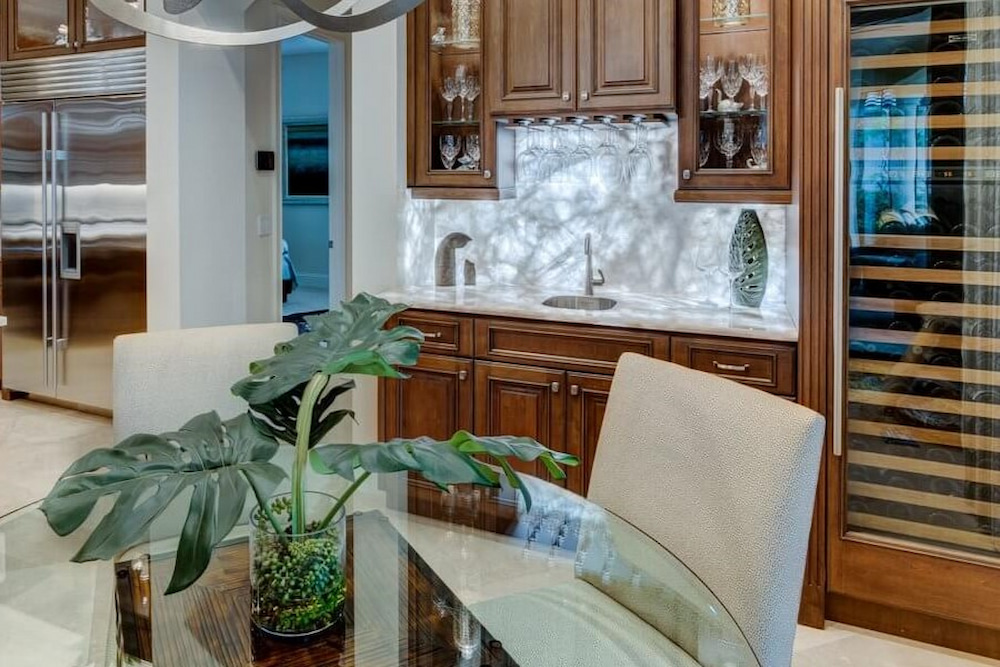
Not every glow is a good glow. Backlit stone can be breathtaking, but it can also be brutally honest. Done right, backlit stone interiors feel almost inevitable; a soft, even illumination seems to emerge from inside the material itself, as though the stone had been quietly storing light all along. Done wrong, the illusion disappears.
Bright spots punch through in some places, dark shadows gather in others, and instead of luminous luxury, the surface starts looking more like a lighting experiment that escaped the laboratory. The difference usually comes down to a handful of technical decisions made long before the stone ever goes up: LED type, spacing, diffusion, sourcing, and the all-important distance between light and material.
Below, we’re digging into why backlit stone sometimes looks uneven and what it actually takes to turn a collection of components into one beautifully believable glow, so keep reading to learn more!
Why does backlit stone sometimes look uneven?
Unevenness almost always traces back to one of three suspects: the LEDs, the stone, or the space between them. Occasionally, all three decide to misbehave at once.
It’s easy to understand why homeowners chase this effect in the first place. When it works, illuminated stone can make a plain surface unforgettable in kitchens, baths, bars, and nearly anywhere else you want a little architectural theater. But that same visual magic is what makes the technique demanding. The stone and the light have to behave less like two separate materials and more like dance partners.
Hot spots from LEDs placed too close
LEDs may be tiny, but they are not shy. Point-source LEDs positioned too close to the back of the stone tend to announce exactly where they are hiding, creating small bright circles surrounded by darker gaps. Without enough distance or diffusion, the eye quickly starts connecting those dots.
The result may technically be illuminated, but it no longer feels luminous. Instead of the stone glowing as a surface, you see the machinery behind the magic.
Mixed LED batches and color temperature
Even LEDs sold under the same color-temperature label can vary slightly from one production batch to the next, a manufacturing reality known as binning. Mix strips from two batches, or worse, from two manufacturers behind the same slab, and those tiny differences can suddenly become surprisingly visible.
On paper, everything may say 3000K. Behind translucent stone, one section can lean warm while another quietly wanders cool. What looks like a lighting-design problem can actually be a procurement problem wearing a very convincing disguise.
Natural variation within the stone itself
Stone, inconveniently and wonderfully, does not care about uniformity. Veining, mineral density, pigmentation, and thickness can all change across a single slab. A section that transmits light beautifully may sit only inches away from an area that absorbs significantly more of it.
That variation is part of the material’s beauty, but it also means the lighting system has to respond to the actual slab, not merely its name on a sample board. This is one reason the best rooms for backlit stone tend to be projects where the fabricator and lighting team have tested the material for transmission before fabrication begins.
Shadows from fixtures and mounting hardware
Light has a habit of revealing everything you hoped it wouldn’t. Mounting brackets, wiring channels, framing members, connectors, and inconsistent standoff distances can all create faint shadow lines behind the stone.
During construction, these pieces may seem completely insignificant. Once the stone is glowing, however, even a small obstruction can suddenly become part of the composition. And usually not in a good way.
Dark edges and corners from the wrong materials
Sometimes the middle of a backlit slab looks gorgeous while the edges and corners seem to fall off a lighting cliff.
That usually isn’t the stone being difficult. Dark perimeter lines can appear when the backing, diffusion material, or lighting cavity isn’t designed to carry illumination all the way to the edge. An opaque frame, the wrong substrate, poorly placed LEDs, or insufficient diffusion can effectively put a border around an otherwise beautifully glowing surface.
Corners are particularly unforgiving because they’re where geometry, structure, and light distribution all collide. If the system doesn’t account for how light reaches those last few inches, the center glows while the perimeter quietly disappears.
This is another reason the materials behind the stone matter nearly as much as the stone itself. The goal isn’t simply to illuminate the middle of the slab. It’s to create a luminous field that reaches cleanly and consistently from edge to edge, and corner to corner.
How do you create an even glow behind stone?
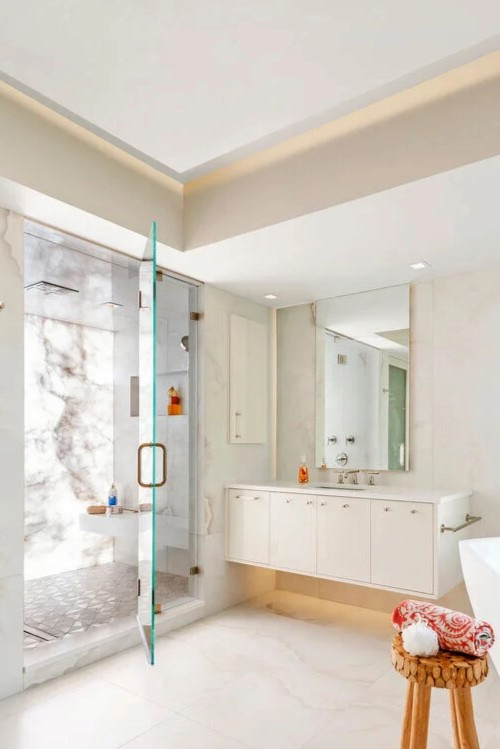
A beautiful backlit surface rarely comes from one heroic decision. It comes from several smaller decisions behaving themselves at the same time.
LED selection, spacing, diffusion, cavity depth, stone thickness, and translucency all interact, which means there is no magic dimension that works for every project. The goal isn’t simply to put light behind stone. The goal is to make the light source disappear so the stone itself appears to be doing the glowing.
Matching LED type and spacing to the slab
Linear LED systems generally produce a smoother field of illumination than isolated point sources, especially behind thinner or more translucent stone.
But even linear light needs room to blend. Spacing and standoff distance should respond to the slab’s thickness, translucency, and internal patterning. A cavity depth that works beautifully behind one half-inch material may leave another looking striped, mottled, or suspiciously like a barcode.
The slab gets a vote.
Sourcing LEDs from a single batch and driver
Consistency starts long before anyone reaches for a screwdriver. Buying LED strips from the same production run helps keep color temperature consistent across the installation. Pairing those LEDs with compatible, properly matched drivers also keeps dimming and output behaving predictably rather than allowing one section to fade differently from another.
It’s a modest procurement decision buried somewhere in the middle of the project, but it can be the difference between two matching glowing surfaces and two surfaces that look like distant cousins.
Adding a diffusion layer
Diffusion is where individual LEDs stop shouting and start working together. A properly selected diffusion panel between the LEDs and the stone helps blend separate points of light into a continuous luminous field before the light ever reaches the material.
The principle is similar to using diffuse light to avoid glare elsewhere in an interior: scatter the source, soften the contrast, and let the surface become the star instead of the hardware hiding behind it. Too little diffusion and every LED wants credit. When it’s done properly, nobody sees the lights at all, they just see the glow.
Testing the layout before final installation
Mockups are considerably cheaper than regret. Even a relatively simple test assembly can reveal hot spots, shadows, color inconsistencies, insufficient diffusion, or problems with cavity depth while those issues are still easy to correct.
This is part of what to plan before backlighting stone on any project: test the actual lighting against a sample of the actual material whenever possible. Not something similar, or the sample from the showroom. The actual material.
Stone varies too much for assumptions to travel safely from one slab to another, and once everything is fabricated, mounted, wired, and sealed into place, experimentation becomes considerably more expensive.
Who should I contact for beautiful backlit stone interiors near me in Fort Myers, Naples & the vicinity?
Illuminated Lighting Design has spent years refining backlit stone installations across Naples, Fort Myers, and the surrounding area, and much of that expertise lives in the details most people never know to ask about.
Our track record includes IALD membership and a combined century of hands-on lighting experience across the team, including projects throughout Southwest Florida and near landmarks such as JetBlue Park.
That experience matters because an extraordinary backlit surface isn’t really about making stone brighter. It’s about understanding how light, material, distance, diffusion, structure, and controls combine until the technology disappears and only the effect remains.
If your stone isn’t lighting the way you hoped, or you’re planning a new project and would prefer to solve the problems before they become permanent glowing reminders, get in touch. We’ll help turn the bright spots, dark spots, and technical question marks into one beautifully resolved surface.
Reach out today!