
How to Create Layered Lighting With LED Retrofits
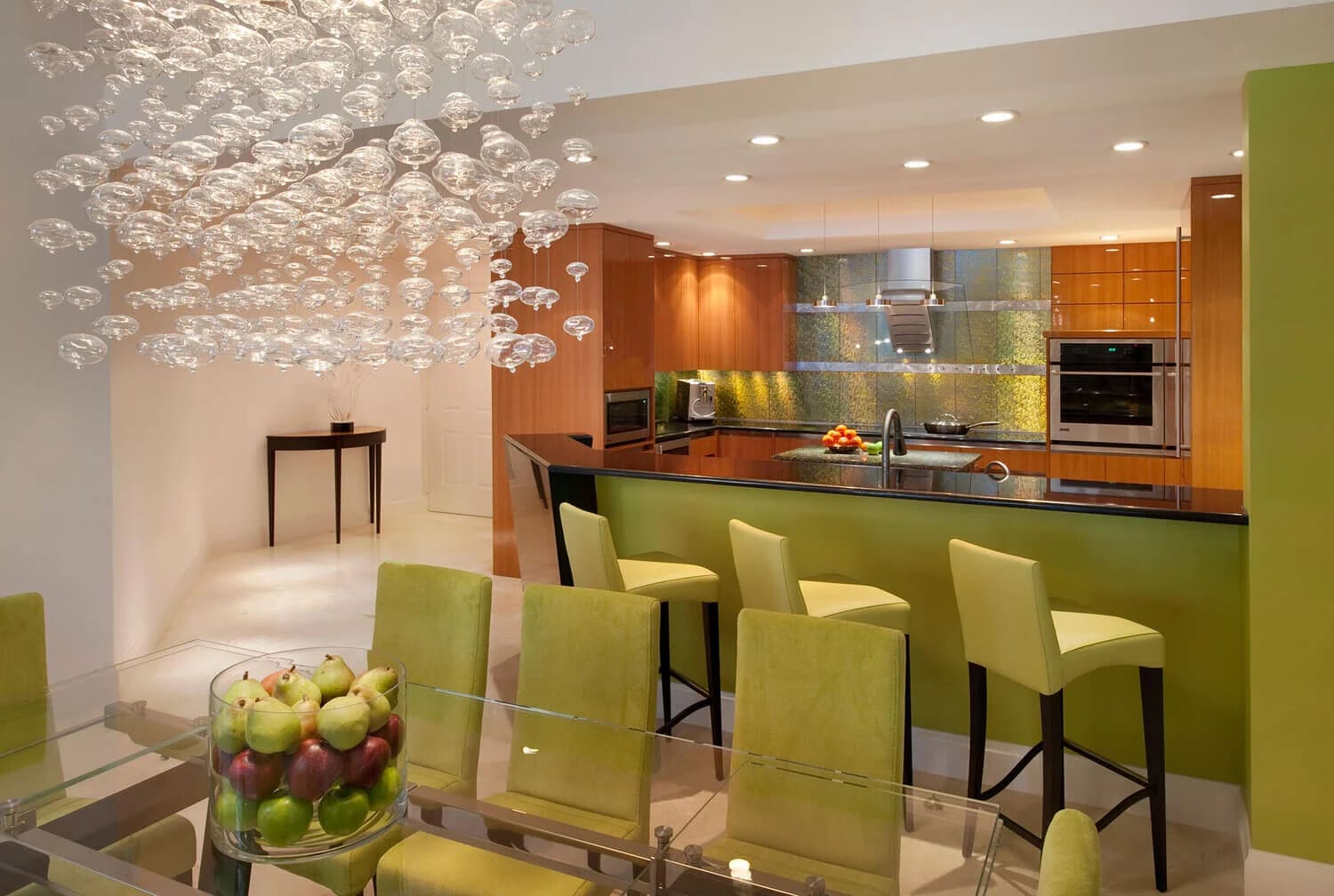
If you’ve ever stepped into a home and thought, ‘Wow, this place looks great, it really glows!’, the truth is probably not from one lighting source doing all the work. A room feels richer when illumination arrives in layers. Some are broad and quiet, some focused and practical, some there purely to make a beautiful detail impossible to ignore, but all with specific roles and purposes.
That’s what makes a recessed lighting upgrade such a sought-after game-changer in upscale homes. Modern LED retrofits provide cleaner, more controllable light overhead, but we don’t expect those fixtures to carry the entire room on their shoulders. Instead, we treat them as one part of a larger composition.
At Illuminated Lighting Design, we think about how every source relates to the next: what creates the backdrop, what helps you perform a task, what draws the eye, and what should simply melt into the architecture. Layer those elements well, and a room stops feeling like a uniformly lit space. It starts feeling alive.
What does layered lighting actually mean?
Layered lighting is the art of combining different types of illumination according to what they need to accomplish. We generally think in three broad categories: ambient, task, and accent lighting. They often overlap, but each has its own role to play.
Ambient light sets the stage
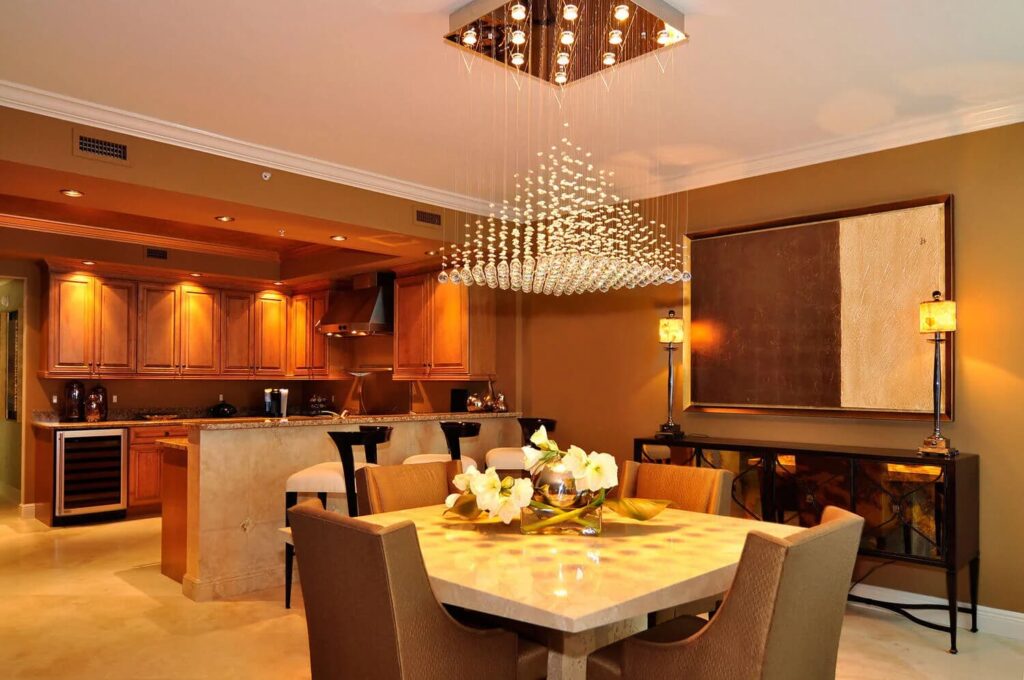
As the name suggests, ambient lighting gives the room its general level of illumination, setting the mood before the other layers get to play.
Recessed LED retrofits can be very useful here, especially when we want clean overhead light without introducing more visual clutter. Wider beam distributions can help create an even foundation across living spaces, circulation areas, kitchens, and other rooms.
But ambient light should feel like a backdrop, not an interrogation lamp. We want enough illumination to make the room comfortable and functional while leaving space for the other layers to create contrast, focus, and personality.
Task lighting knows where the action happens
Task lighting gets more specific. It belongs where you chop vegetables, read a book, apply makeup, work at a desk, or pour guests a drink without accidentally missing the glass. Good task lighting should put the right amount of light exactly where you need it.
An adjustable recessed retrofit may help direct light toward a countertop or work surface, but it doesn’t always need to do the job alone. Undercabinet lighting, pendants, vanity lighting, integrated millwork lighting, and other sources can often bring light closer to where the task actually happens.
Accent lighting gets to be a little dramatic
This is where lighting starts having fun. Accent light draws attention to the features that give a room its character: artwork, sculpture, textured walls, veined stone, architectural details, shelving, millwork, or a beautifully composed vignette.
Narrower or adjustable recessed sources can become part of this layer, but so can linear lighting, picture lights, concealed sources, and dedicated art lighting.
If ambient light should let you see the room, accent light tells you where to look.
How do we make lighting layers speak the same language?
Layering is not simply a matter of adding more fixtures. Too many competing sources can make a room feel busy, disjointed, or overlit. The real craft lies in making each layer feel connected while still allowing it to do something different.
Coordinate color temperature with intention
If one fixture feels warm and golden while the one beside it looks icy blue, the room can quickly lose its visual rhythm.
That doesn’t mean every source must always share the exact same color temperature. We may intentionally vary warmth for a specific effect, but accidental differences are another story. Our team looks at how the temperatures relate to one another and to the finishes in the room. Warm wood, pale stone, polished metal, painted surfaces, and textiles all respond differently to light.
The goal is coordination, not conformity.
Keep color quality in the conversation
Matching Kelvin values doesn’t guarantee that two sources will render color the same way.
Color quality matters when layered lighting lands on artwork, cabinetry, stone, fabric, food, skin tones, and all the other details that make an interior feel complete. If one light source makes walnut look rich and another makes it look strangely dull, the layers may technically match on paper while visually arguing with each other.
We’d rather keep the peace.
Give each beam a job
Broad, narrow, fixed, adjustable—beam distribution shapes what each layer actually does.
A wider beam may support ambient illumination while a tighter beam can create an accent. An adjustable source lets us redirect attention toward a wall, artwork, or architectural feature. This is why simply filling every existing recessed opening with the same retrofit module usually misses the point.
The fixtures may match. The lighting doesn’t necessarily have to behave identically.
Should every lighting layer have its own volume control?
A beautifully layered room shouldn’t have only two moods: everything on and everything off. Separate controls allow different lighting layers to respond to what’s happening in the space. The scene you want while preparing dinner is not necessarily the one you want once the plates are cleared and the wine comes out.
Ambient lighting can step back. Accent lighting can come forward. Task sources can brighten when needed and disappear when the work is done.
Dimming gives us even more control over that hierarchy. Not every layer needs to shine at the same intensity. In fact, when every source is equally bright, much of the depth disappears. Contrast is what allows the eye to move through a room and notice what matters.
Think of each lighting layer as a brushstroke. On its own, it has a purpose; together, the layers create the full picture.
What happens when recessed lighting steps out of the spotlight?
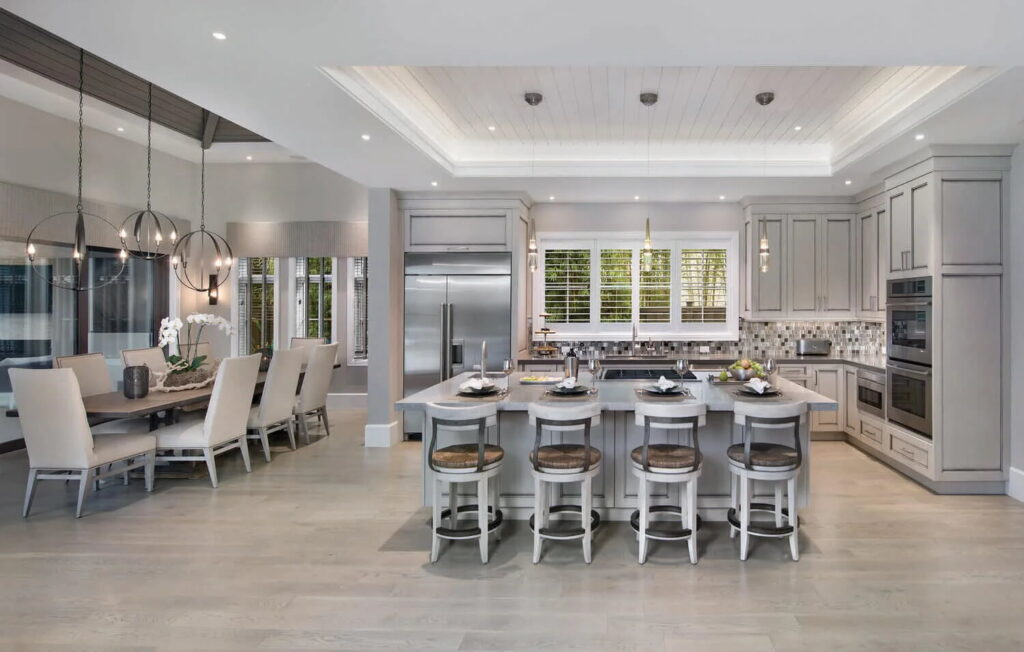
Recessed lighting is wonderfully useful, but it shouldn’t be asked to impersonate every fixture in the room.
A successful layered design often reaches beyond the ceiling. We may combine LED retrofits with linear lighting tucked into architectural details, integrated illumination inside cabinetry or shelving, decorative pendants, wall sconces, art lighting, undercabinet sources, or lighting concealed within millwork.
These elements add dimension at different heights and give the room more visual texture than overhead lights can create on their own.
We also pay attention to the ceiling itself. When existing cans are retrofitted, consistent trim sizes, apertures, finishes, and proportions help keep the overhead plane visually calm. That way, the recessed fixtures can do what they often do best: disappear quietly while everything beneath them gets the attention.
Who should I call for an upscale recessed lighting upgrade in Naples, Fort Myers & Southwest Florida?
Ready to give every layer its place and create a sophisticated lighting setup that contributes something meaningful to your home? That’s exactly what Illuminated Lighting Design brings to residences around the Naples Botanical Garden and throughout the region. We look at the bigger picture—what should glow softly, what deserves focus, where contrast creates drama, and when a fixture should simply fade into the background.
If you’re still exploring the possibilities of LED retrofit lighting, not sure why making the switch is worth it, or want to discover what deserves a closer look before the retrofit starts, our team is here to help. We’ll shape the light around the architecture, the materials, and the way you want each room to feel—because better lighting creates better purpose, and better purpose leads to a better experience.
That’s how every layer finds its place so the light stops simply filling the room and starts shaping it!